
by David B. Seaburn
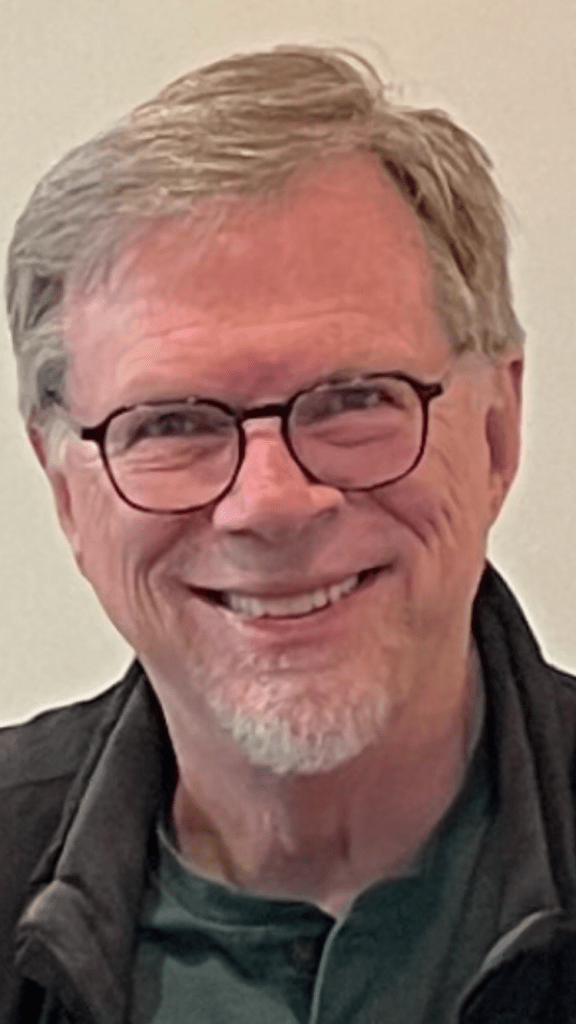
It was in seminary in the early 1970s that I first appreciated the importance of words, language, and stories as a primary means of creating meaning. I was soon to become an ordained Presbyterian minister. Writing sermons that brought the human condition and the sacred response together would be my bread and butter. Being able to tell stories that touched the lives of my congregants, that raised important questions, that pointed in new directions was the hub of my wheel as a preacher in a small country church. During that time, I tried other form of writing, as well —journaling (for fifty years), poetry, short stories, plays, songs.
While serving the church, I went back to school to get another master’s degree, this time in counseling, and left parish ministry for community mental health work. I submitted articles to various journals, succeeding in getting a few published. Having someone else say ‘This is good enough for others to read’ was very encouraging.
I continued my mental health work, trained as a marriage and family therapist, and was recruited to the University of Rochester School of Medicine and Dentistry. Eventually, I became Assistant Professor of Psychiatry and Family Medicine. I also went back, yet again, for another degree, this time a PhD in psychology.
Working in an academic setting meant that writing and publishing was an expectation. During those twenty years, I wrote over sixty journal articles, including several creative nonfiction pieces, and co-authored two books. I learned self-discipline as a writer, and how to commit to long term projects.
During those twenty years, I wrote over sixty journal articles, including several creative nonfiction pieces, and co-authored two books. I learned self-discipline as a writer, and how to commit to long term projects.
But, at that point, I had never written a novel. In fact, I thought novel writing was beyond my ability. I loved writing, though, and found that listening to my parishioners when I was serving a church and to my patients when I was doing therapy made me think about the extraordinary experiences embedded in what seem to be the ordinary lives of regular folk. That would become the focus of my fiction writing.
I got an idea for a novel in 1990. But I couldn’t figure out how to proceed and I had no idea what the ending would be. So, I put the notes away for ten years. In 2000, I read a novel that gave me an idea how to write the story. I took the notes out of the drawer, and completed that novel—Darkness is as Light—in one year. I tried but couldn’t get an agent or even a nibble from a publisher. I put it in the drawer again for a few years until someone suggested a come-one-come-all publisher. I submitted the manuscript and it was accepted. In 2005, the novel came out.

By then, I had started my second novel. I still thought of myself as “someone who writes” rather than as a “writer,” but there was no denying that novel writing was moving to the center of my life. I left the medical center to direct a free family counseling center in our school district, in part, because I would have more time to do the writing that I wanted to do. My second novel came out in 2007.
When I finished my third novel—Charlie No Face—I decided I wanted to find a better publisher. As you all know, this is a daunting task. I was rejected dozens of times by agents and publishers alike until I found a home for this novel. It was released in 2011. By then, I thought of myself as a writer, which is to say, it isn’t just something I do, it’s who I am.
By then, I thought of myself as a writer, which is to say, it isn’t just something I do, it’s who I am.
I decided to change publishers again after two more novels. This time I was rejected sixty-six times, before finding the indie publisher I am with now. As of this date, I have had nine novels published by traditional publishers, the most recent, Give Me Shelter, came out in December 2022. I am currently working on my tenth.
Writing is a very solitary endeavor. For indie writers, I think it is even more solitary. Even though I have an excellent indie publisher, it’s up to me to find the motivation to sit down and write every day. There is no book advance subsidizing my work. My publisher welcomes my novels as they come, and they do a great job publishing, but like most indie publishers, they don’t have an abundance of money for marketing. They do the best they can and point me toward other marketing options. Since I absorb the lion’s share of the marketing costs, spending more than I make is the norm.
Nevertheless, like you, I can’t help but write. It is who I am. It is the way I find and create meaning. For me, the reward for writing is doing more writing. Of course, an honor here and honor there, a five-star reader review, a request to do a reading, or to teach, all these things help, all these things matter, all these things make sitting here in front of this computer worthwhile.
David B. Seaburn’s novels include: “Darkness is as Light” (2005); “Pumpkin Hill” (2007); “Charlie No Face” (2011), a Finalist for the National Indie Excellence Award in General Fiction; “Chimney Bluffs” (2012), “More More Time” (2015), and “Parrot Talk” (2017), second in the TAZ Awards for Fiction (2017), short listed for the Somerset Award (2018); “Gavin Goode” (2019), American Book Fest Finalist for “Best Book” in General Fiction (2019) and Semi-Finalist in Literary, Contemporary and Satire Fiction for the Somerset Award (2019); “Broken Pieces of God” (2021), Finalist for the National Indie Excellence Award in General Fiction (2021), runner-up for the Pencraft Award in General Fiction (2022); “Give Me Shelter” (2022) short-listed for the Literary and Contemporary Fiction Somerset Award (2022) and Finalist for the Maxy Award in Literary and Humor Fiction (2023).
Seaburn is a retired marriage and family therapist, psychologist and Presbyterian minister who lives near Rochester, NY with his wife, Bonnie. They have two married daughters and four wonderful grandchildren, and a fifth coming in July! All of Seaburn’s novels are available through Amazon. Learn more at his website.
If you’re an indie author and you’re interested in guest posting on this blog, email here.


Leave a Reply